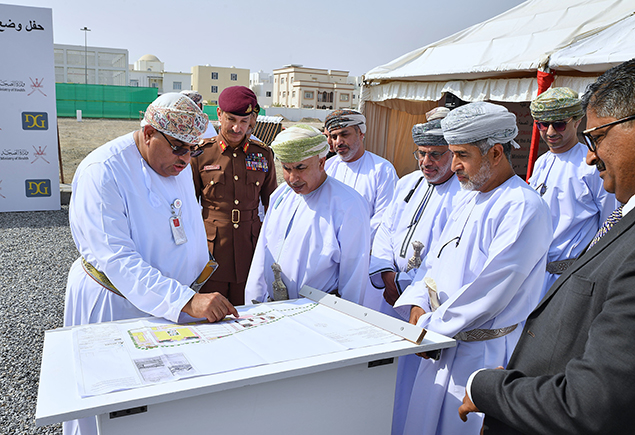
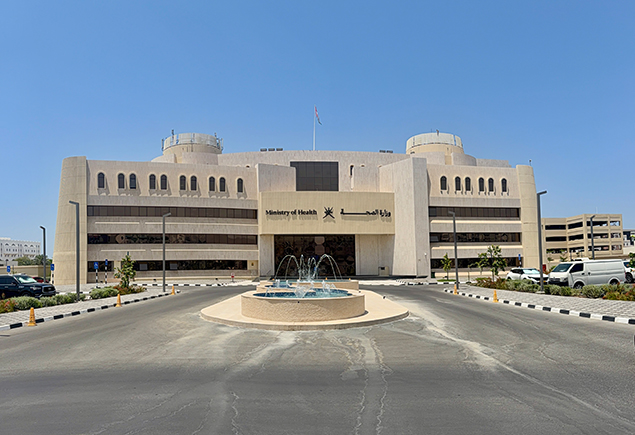
The Ministry of Health today (Wednesday) celebrated the laying of the foundation stone for the National Genome and Human Data Center (Genome Oman) at the Central Public Health Laboratory premises in Muscat.
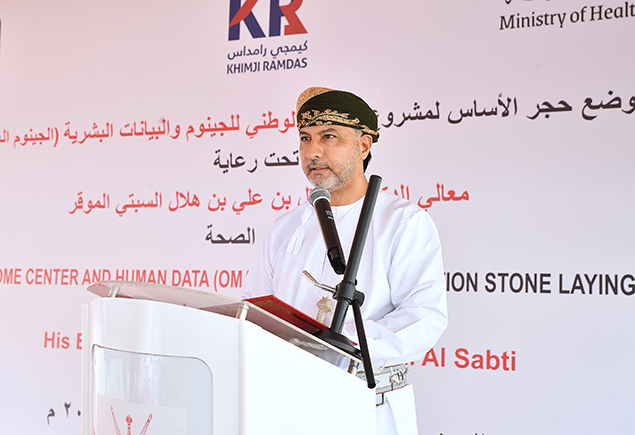
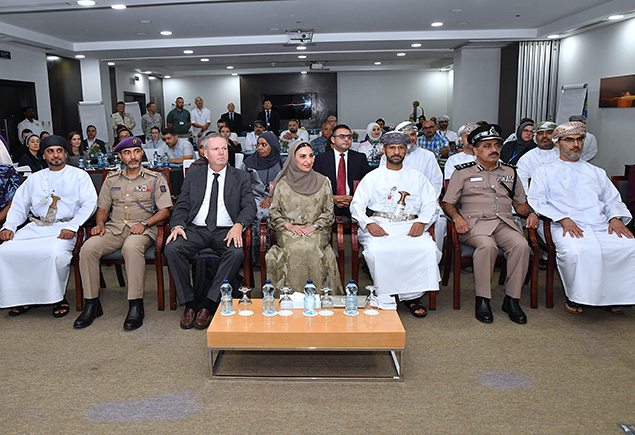
The ceremony was held under the patronage of H.E. Dr. Hilal bin Ali bin Hilal Al Sabti, Minister of Health, and attended by a number of Their Excellencies, senior officials and specialists from the health and academic sectors, as well as experts in scientific research and biological data.
The ceremony began with a welcome address delivered by Professor Dr. Khalid bin Hamid Al-Rasadi, Professor at the College of Medicine and Health Sciences at Sultan Qaboos University and Supervisor of the Genome Oman Programme. He underscored that the project embodies the objectives of Oman Vision 2040, highlighting its significance in mapping the genomic composition of the Omani population and establishing a reference database that will enhance the Sultanate of Oman’s position as a scientific hub for genomic research, support the knowledge economy, and advance strategic therapies.
He outlined three key pillars underpinning the programme: developing national capabilities in bioinformatics, statistical genetics, clinical genetics, biobanking, and artificial intelligence; translating genomic mapping into clinical applications through precision medicine, the discovery of new drugs for genetic disorders, and the conduct of clinical trials based on the genetic makeup of the Omani population; and maximizing the programme’s research and economic impact by serving as a platform for international scientific partnerships and a foundation for emerging biotechnology industries that can help reduce the healthcare system’s burden and costs associated with chronic diseases.
Dr. Ali Abdulhussein Al-Lawati, Advisor to the Minister of Health for Engineering Affairs, pointed out in his speech that the center designed in accordance with the latest building technologies and bioscience laboratory design standards, taking into account biosafety requirements, energy efficiency, smart building management systems, and provisions for future expansion.
He stressed that the center will be equipped with state-of-the-art high-throughput whole-genome sequencing technologies, as well as an automated national biobank capable of storing more than one million samples at ultra-low temperatures of down to 80 degrees Celsius below zero and in liquid nitrogen. The facility will also feature around-the-clock monitoring and surveillance systems, together with backup power supplies to ensure the integrity and safety of samples for decades.
The project has a construction cost of more than OMR 4.2 million and is being built in the Wilayat of Seeb, Muscat Governorate, on a total area of 10,625 sq.m. It is located on a 53,000-square-metre site shared with the Central Public Health Laboratory.
The project comprises a main laboratory building with an area of 3,000 sq.m. and a 600-square-metre services building connected by a concrete utility tunnel, in addition to an electrical substation, parking facilities, and external services. The construction phase is scheduled to take nine months, followed by an additional 45 days for fit-out and preparatory works.
The center will also house a data and high-performance computing center for the storage and processing of genomic data. It will operate in accordance with the highest standards of cybersecurity, data governance, and genomic privacy protection, ensuring that national data remains within a secure and robustly governed infrastructure.
The National Genome and Human Data Center (Genome Oman) serves as the foundational infrastructure for the Oman Genome Programme. In its first phase (2025–2030), the programme aims to sequence the complete genomes of 20,000 Omani citizens representing the diverse segments and geographic regions of Omani society. The programme will then expand through its subsequent phases to reach 100,000 participants by 2040, thereby establishing a reference genomic database for the Omani population.
This database will contribute to advancing precision medicine by enabling tailored preventive and therapeutic solutions based on an individual’s genetic makeup, improving the early detection of genetic and chronic diseases such as diabetes, cardiovascular disease, and cancer, strengthening premarital and newborn screening programmes, and providing decision-makers with accurate data and evidence to support future health planning.
The laying of the foundation stone marks a significant scientific step towards establishing this advanced infrastructure at the Central Public Health Laboratory, ensuring the integration of advanced laboratory testing with modern genomic sequencing technologies and big data analytics under one umbrella.
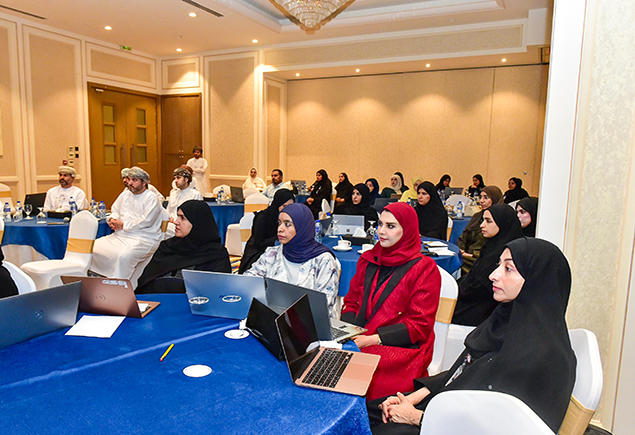
The programme prioritizes the development of young Omani professionals in genomics and bioinformatics, in partnership with Sultan Qaboos University and academic and research institutions. It also opens new avenues for the discovery of therapeutic targets and new treatments for genetic disorders, the establishment of international research partnerships, and the development of emerging biotechnology industries that support the knowledge-based economy envisioned by Oman Vision 2040.
The project reflects the Ministry’s commitment to investing in future technologies and fostering medical innovation. It will operate in accordance with the highest standards of privacy, security, and ethical governance to protect national genomic data, based on voluntary participation and informed consent.
The project is expected to bring about a significant transformation in the quality of healthcare provided to citizens by linking genomic analysis results with national health records and establishing an integrated biobank. This will further strengthen the Sultanate of Oman’s position as an advanced regional hub for medical and genomic research.