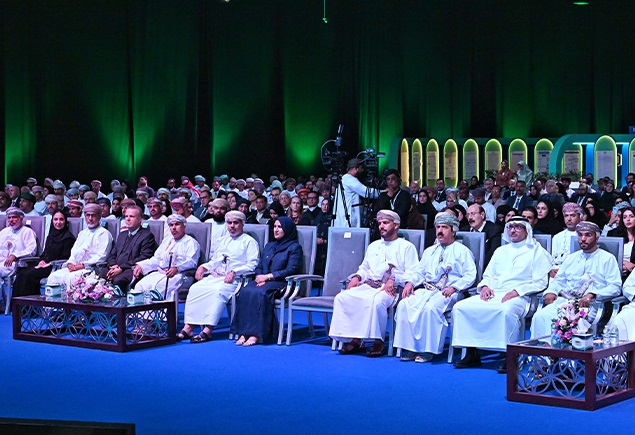
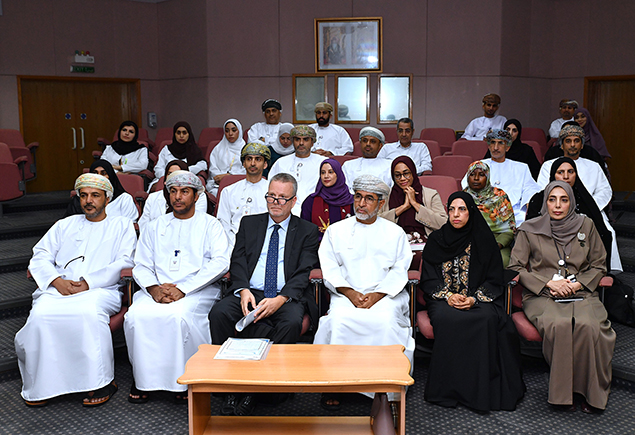
The Oman International Pharmacy Congress and Exhibition opened on Sunday evening at the Oman Convention and Exhibition Centre, under the patronage of H.E. Dr Hilal bin Ali Al Sabti, Minister of Health, and in the presence of leading healthcare professionals and pharmacy experts from 13 countries.
At the opening ceremony, Pharmacist Raed bin Mahmoud Al Sabri, Director General of Medical Supplies at the Ministry of Health and Chairman of the Congress, explained in his opening address that every medicine has two journeys. The first involves research, manufacturing, regulatory oversight, and supply, ending when the medicine reaches the patient. The second begins at that point, as scientific knowledge is translated into treatment decisions and ultimately into a meaningful impact on people’s lives.
He noted that gene therapies, cell therapies and precision medicine are redefining the boundaries of what is medically possible. These advances, he said, also bring greater responsibilities, as they require specialized pharmaceutical care, rigorous regulatory oversight and pharmaceutical analysis to ensure quality and safety. They also depend on reliable and timely supply chains, even amid disruptions, as well as sound financial planning to ensure sustainable and equitable access. He stressed that patient safety is the fundamental principle underpinning all these efforts.
He added that the three-day agenda covers pharmacogenomics from genotype to treatment; biological medicines and (Chimeric Antigen Receptor (CAR) T-cell therapy); the role of artificial intelligence in shaping the future of pharmacy; health technology assessment; green pharmacy; and the pharmaceutical industry.
Alongside research addressing key healthcare system priorities, including developing a strategic framework to strengthen the resilience of pharmaceutical supply chains across the GCC countries, as well as linking health technology assessment with the development of clinical treatment protocols in collaboration with the UK’s National Institute for Health and Care Excellence (NICE).
Al Sabri also announced the launch of the Excellence Award this year, highlighting the accompanying exhibition as a bridge between innovation and the needs of the healthcare sector. He further stressed that the growth of local pharmaceutical manufacturing in Oman is an opportunity that requires joint efforts.
Professor Ahmed bin Hamdan Al Jidai, President of the Saudi Society of Clinical Pharmacy, delivered the congress keynote address entitled “Improving the Medicine Journey to the Patient: A Multistakeholder Approach”. He outlined eight stages in the medicine journey before it reaches the patient, covering research and development, registration, manufacturing, procurement, distribution, prescribing, dispensing, use, and follow-up.
Al Jidai stressed that medication errors carry high costs, although most are preventable. Such errors, he explained, commonly occur at handover points between different stakeholders, making it impossible for any single party to address them independently. He proposed four shared foundations for improving the medicine journey. The first is shared data, enabling a unified patient record, a single product identity and a reliable source of pharmacovigilance information. The second is harmonized standards covering registration dossiers, good manufacturing practices and quality measures. The third is workforce development through educational programs designed jointly by industry, universities and regulatory authorities. The fourth is shared accountability based on unified governance, common performance indicators and outcome-based contracts.
He pointed out that GCC countries have a unique opportunity due to their alignment in strategic vision and funding. He highlighted Oman’s experience in developing a unified electronic health record and the economic diversification programs under Oman Vision 2040, alongside Saudi Arabia’s experience.
The congress scientific program covers the entire medicine journey, from genetics, clinical trials and regulatory processes to dispensing, medication safety, health economics and sustainability.
The event’s activities began on Sunday morning with pre-congress workshops covering regulatory submission dossiers through the electronic Common Technical Document (eCTD), optimizing medication use among older adults, clinical trials, medication safety during transitions of care, bioequivalence and a GCC framework for pharmaceutical supply chain resilience.
The second day opens with a plenary session on pharmacogenomics in clinical practice. Topics include a lipid-lowering treatment designed for the Omani population, clinical trial culture, and the journey of the US healthcare system towards advanced therapies.
This will be followed by parallel sessions covering a range of topics, including Patient-Centered Care for Safer Healthcare Systems, Biological Medicines and Biosimilars, Pharmaceutical Education and Training, and Pharmaceutical Regulation.
On the second day, a dedicated session will be held at the invitation of the UK's National Institute for Health and Care Excellence (NICE), in collaboration with the Directorate General of Medical Supplies. The session will explore the link between health technology assessment and the development of clinical guidelines, supporting evidence-based and value-driven decision-making.
The final day will feature several sessions addressing artificial intelligence in the future of pharmacy, green pharmacy, and the latest developments in clinical pharmacy.
The Congress highlighted the Royal Hospital's experience in restructuring its clinical pharmacy services, as well as a pharmacist-led model of care for cancer patients and the early detection of cognitive impairment.
In addition, discussions on health technology assessment in the region also explored ways to optimize spending on high-cost medicines through managed entry agreements, examined Kuwait's experience, and assessed the cost-effectiveness of obesity treatment in the Sultanate of Oman.
The congress aims to strengthen integration across the pharmaceutical sector by bringing together clinical practice, education, scientific research, pharmaceutical industries and regulatory authorities under one platform. It also provides an opportunity for scientific exchange and international cooperation, bringing together experts from around the world, particularly from GCC countries, to share knowledge and best practices.
It further seeks to advance pharmaceutical care through patient-centered practices and the appropriate use of medicines, while strengthening medication safety by reducing errors and encouraging patient engagement.
The congress supports innovation and digital transformation by exploring artificial intelligence and advanced therapies. It also promotes evidence-based and value-based healthcare through collaboration with NICE, with the aim of integrating health economics and health technology assessment into clinical guidelines.
Furthermore, it seeks to strengthen the resilience of pharmaceutical supply chains through a GCC strategic framework and policy papers supporting pharmaceutical security. Other priorities include developing pharmaceutical professionals, advancing scientific research, encouraging investment and promoting the localization of pharmaceutical manufacturing, in alignment with Oman Vision 2040 and the Sultanate’s ambition to become a regional hub.
The 2026 edition brings together approximately 1,500 participants from 13 countries, five international health organizations, and around 65 exhibitors, providing a platform for the various sectors to engage and collaborate.