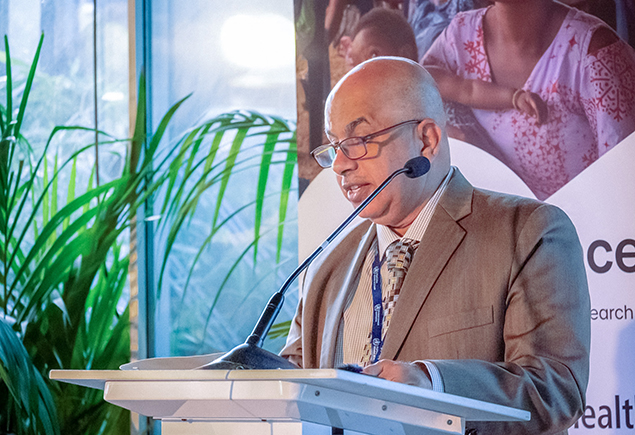
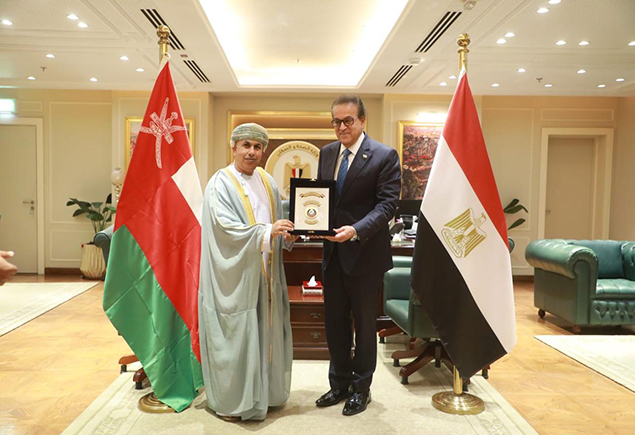
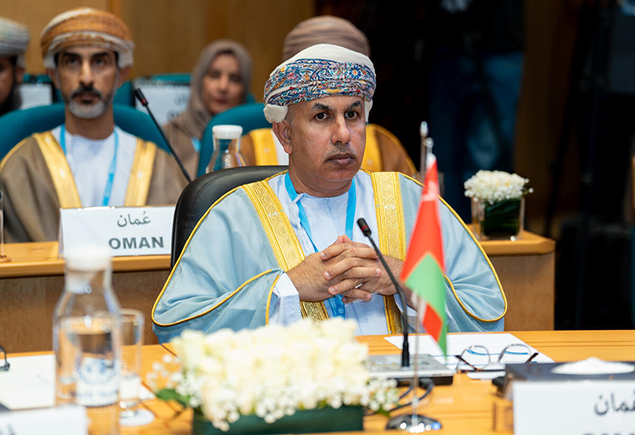
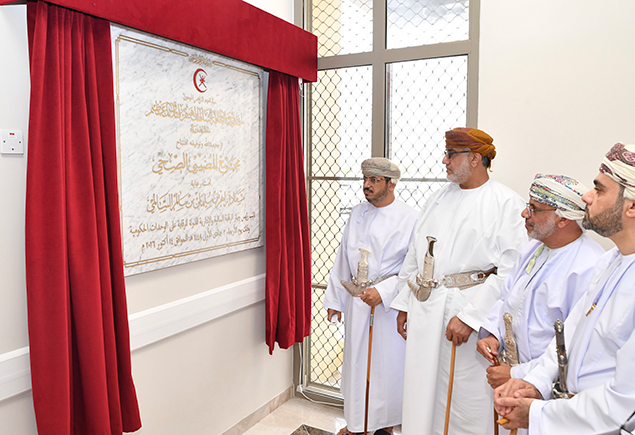
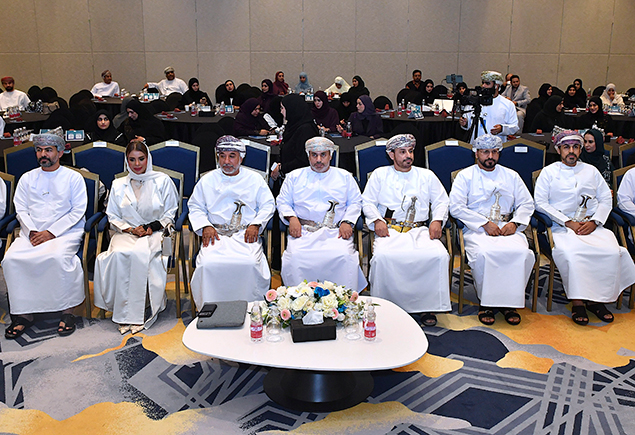
Yesterday, H.E. Dr. Hilal bin Ali Al Sabti, Minister of Health, participated in the “Digital Health Wallets” event, one of the key side events held alongside the Seventy-ninth World Health Assembly (WHA79) in Geneva, together with several health ministers and international experts specializing in the future of digital health records.
During his remarks at the event, H.E. Dr. Hilal Al Sabti, Minister of Health, highlighted that Oman Vision 2040 envisions a health system that is technology-driven, patient-focused, and globally connected. He pointed out that ensuring patients are at the center of the digital healthcare system should be a universal right accessible to everyone, a goal supported through ongoing collaboration with the World Health Organization within the framework of the Global Digital Health Certification Network.
The Minister of Health further noted that the experience of the digital Hajj Health Card has proven that the International Patient Summary (IPS) initiative is not merely a theoretical concept, but a practical solution that delivers tangible impact on people’s lives. He pointed out that more than half a million pilgrims during the 2024 and 2025 Hajj seasons were able to carry their verified health records, enabling them to receive timely and accurate medical care in critical moments. He emphasized that these records were not simply administrative tools but played a vital role in saving lives.
H.E. Dr. Hilal bin Ali Al Sabti, Minister of Health, explained that the Ministry of Health in the Sultanate of Oman is striving to achieve a profound principle: Every person should be the custodian of their own health information, through what is known as the “architecture of trusted health credentials” framework. This framework combines verifiability, portability, sovereignty, and personal control. He emphasized that it is not a commercial product, but rather a global framework that the Sultanate of Oman aims to support and advance for broader international adoption.
The Minister of Health concluded his remarks by affirming the Sultanate of Oman’s full readiness to share this experience with countries seeking to adopt and implement the International Patient Summary (IPS) initiative. This reflects a clear vision that carries a unified message from Muscat to Geneva: a global digital health future grounded in collaboration, innovation, and respect for human dignity.
The Sultanate of Oman, alongside Indonesia and Malaysia, participated in the digital Hajj Health Card pilot during the 2024 Hajj season, marking one of the largest global implementations of verifiable digital health records in a mass-mobility setting. The initiative benefited more than 250,000 pilgrims, who were supported by secure and trusted health records accompanying them throughout their movement and access to healthcare services.
This pioneering role is underpinned by an integrated digital health ecosystem that the Sultanate of Oman has developed over the years. At its core is the “Al-Shifa” system, which today connects more than 85% of healthcare institutions across the country. This is further strengthened by a robust national digital infrastructure and the role of the Health Command and Control Center (CCO) in managing healthcare services and monitoring them during seasons and mass gatherings. These elements reflect a genuine state of readiness to lead digital health models at both regional and international levels.
In line with its accelerating digital transformation journey, the Sultanate of Oman and the World Health Organization are exploring an ambitious strategic partnership to develop the “Global Digital Health Wallet” initiative. The initiative aims to enable individuals to securely access their essential health data, including vaccination certificates and the International Patient Summary, through globally standardized frameworks that ensure trustworthiness and interoperability across health systems worldwide.
The discussions during the event focused on the qualitative shift from fragmented and siloed health systems to comprehensive digital health wallets built on internationally recognized standards. These systems provide patients with a trusted health record that accompanies them wherever they go, while enabling healthcare providers to make well-informed clinical decisions regardless of geographic location.
This event carries exceptional significance amid the growing pace of international mobility and the increasing need for more integrated and resilient health systems. This need has been further underscored by the lessons of the COVID-19 pandemic, which exposed the fragility of cross-border health coordination in the absence of unified standards and fragmented health data systems.
The participation of H.E. the Minister of Health in this high-level event underscores that the Sultanate of Oman is not merely keeping pace with global digital health transformations but is positioning itself as an active and influential partner, offering real-world models and successful field-tested experiences that merit replication and scaling at the international level.